2RedBeans
2026 Must-Watch Romance Drama Recommendations: Four Emotional Mirrors That Will Touch Your Heart
Whenever a good romance drama comes to an end, we turn off the screen, feeling as if something has filled our hearts, yet also as if a part of us has been hollowed out. That complex emotion is less about lingering over the plot and more about glimpsing our own reflections in the joys and sorrows of others.
In 2026, a few romance dramas (including upcoming ones) have quietly captured the audience's attention. Instead of deliberately crafting overly sweet fairy tales, they approach the most genuine confusions and dilemmas in modern relationships with a sober honesty. 2RedBeans Matchmaking Consultants would like to recommend these mirror-like works-they may not offer perfect templates for love, but they allow us to see ourselves more clearly in the struggles and choices of the characters, finding our own emotional revelations.
1. Roses in Bloom: Are We Testing Love, or Are We Testing Our Own Fears?
If you could design a perfect encounter, set up every romantic moment, and even predict every reaction from the other person, does that mean you can completely control love? A Bouquet of Roses offers a thought-provoking answer: no.
Wang Ziwen plays Li Xiaoxi, a professional "love tester." Her job involves being hired by clients to assume various identities, approach target individuals, and test their loyalty with carefully crafted scripts. It’s a job that demands exceptional acting skills and empathy, yet Li Xiaoxi remains coolly detached. She firmly believes that human nature cannot withstand testing and that she is merely helping her clients see the inevitable outcome in advance.
Until she met Xiao Bei (played by Liu Yuning). This seemingly ordinary man rendered all her scripts ineffective. His unpredictable reactions, clumsy yet sincere responses, and that clear sense of boundaries made Li Xiaoxi question her professional beliefs for the first time. Even more interestingly, when she realized she had developed genuine feelings for Xiao Bei, she became the one most afraid of being tested-she began to worry: if Xiao Bei learned her true identity and initial motives, would this budding affection wither instantly?
The most ingenious design of Roses in Bloom lies in how it externalizes the subtle "insecurity" that modern people often feel in intimate relationships into a specific profession. To some extent, we have all been Li Xiaoxi-not in a professional sense, but in the way we can’t help but test our partners, check their phones, or search for evidence that "they love us." We might also have been Xiao Bei-feeling exhausted and wronged due to a lack of trust.
In the end, what Li Xiaoxi must face is not how to design a more perfect testing plan, but how to let go of control and learn to trust the person who chooses to stay, even after knowing the whole truth.
2RedBeans Matchmaking Consultant's Recommendation:
This drama is a must-watch for all friends who struggle with insecurity in relationships and are prone to anxious speculation. It dramatically reveals a core contradiction: attempting to use "tests" to gain a sense of security is, in itself, the most destructive signal of distrust. True trust is built on clear communication and mutually established rules. When you feel uneasy, we suggest you stop the internal "detective game" and practice transforming accusations like "Why are you always like this?" into honest expressions such as, "When you... (specific behavior), I feel... (specific emotion), because I need...". Learning to take responsibility for your own feelings, rather than demanding that the other person provide endless proof to ease your insecurities, is the first step toward building a mature relationship.
2. Snipe the Butterfly: When Love Transcends Time and Identity, What Truly Defines Equality?
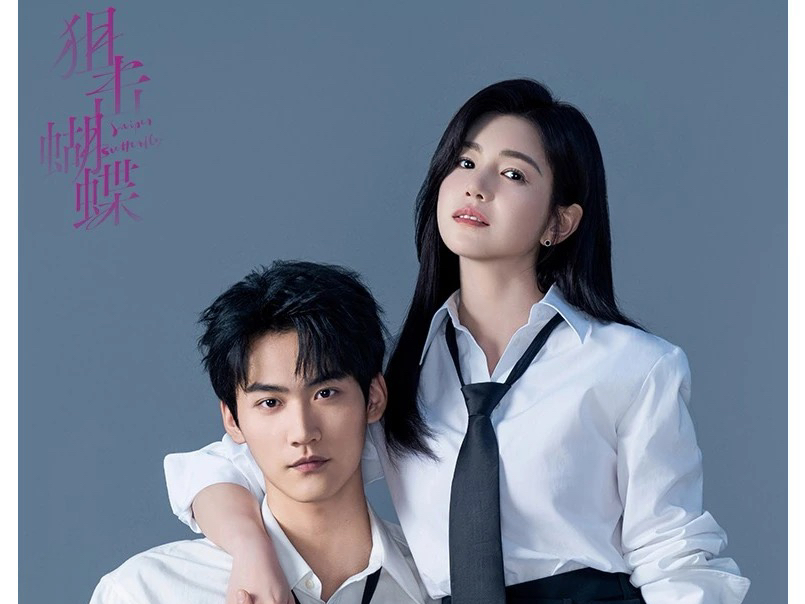
How can a relationship that begins with "financial support" evolve into one of equality? Snipe the Butterfly does not shy away from this challenge. Instead, it uses delicate brushstrokes to depict the complexity and beauty of such a relationship.
Chen Yanxi plays Cen Jin, who, at the lowest point in her life, makes a decision that spans several years: to continue funding the education of Li Wu (played by Zhou Keyu), a young man from a mountainous region. This decision may initially have been driven by sympathy, a sense of responsibility, and a desire for self-redemption. Years later, when Li Wu re-enters Cen Jin’s life as an accomplished young man, the dynamic between them undergoes a subtle yet profound transformation.
Li Wu’s gratitude is genuine, but his affection does not stem from gratitude. He sees the vulnerability beneath Cen Jin’s strong exterior and the loneliness behind her success. He protects her in his own way-not as a beneficiary repaying a benefactor, but as a man cherishing the woman he loves. Through her interactions with Li Wu, Cen Jin gradually sheds the psychological burden of being a “benefactor” and learns to accept being cared for and cherished.
What truly touches the heart in this drama is its portrayal of how love naturally dissolves differences in identity. Between Cen Jin and Li Wu, there is no one-sided narrative of one saving the other-only two souls seeing and fulfilling each other. What they bridge is not just an eleven-year age gap but also the different roles imposed on them by societal labels. Only when Cen Jin can wholeheartedly accept Li Wu’s love without feeling it’s "inappropriate," and when Li Wu can express care on equal footing without being constrained by a "debt of gratitude"-do they truly stand as equals.
True love allows you to shed all societal roles and simply love and be loved as a pure human being.
Why 2RedBeans Matchmaking Advisors Recommend It:
We recommend this series to all couples in non-traditional relationship dynamics, such as those with an age gap where the woman is older, or differences in income or life experience. It brilliantly illustrates that the key to a healthy relationship is not external equality but an internal sense of mutual respect and equality. Consultants suggest regularly conducting honest "power dynamic" check-ins with your partner: Can both parties comfortably express differing opinions? Are major decisions discussed together? At the same time, actively create "shared projects" that belong to both of you, such as planning trips together or cultivating common hobbies. This can transform the sense of "you and me" into a solid feeling of "us" as a team. The lasting power of a relationship stems precisely from this continuously strengthened sense of partnership.
3. City of Dance: Reuniting with an Old Flame-Are We Making Up for the Past or Seeking New Possibilities?
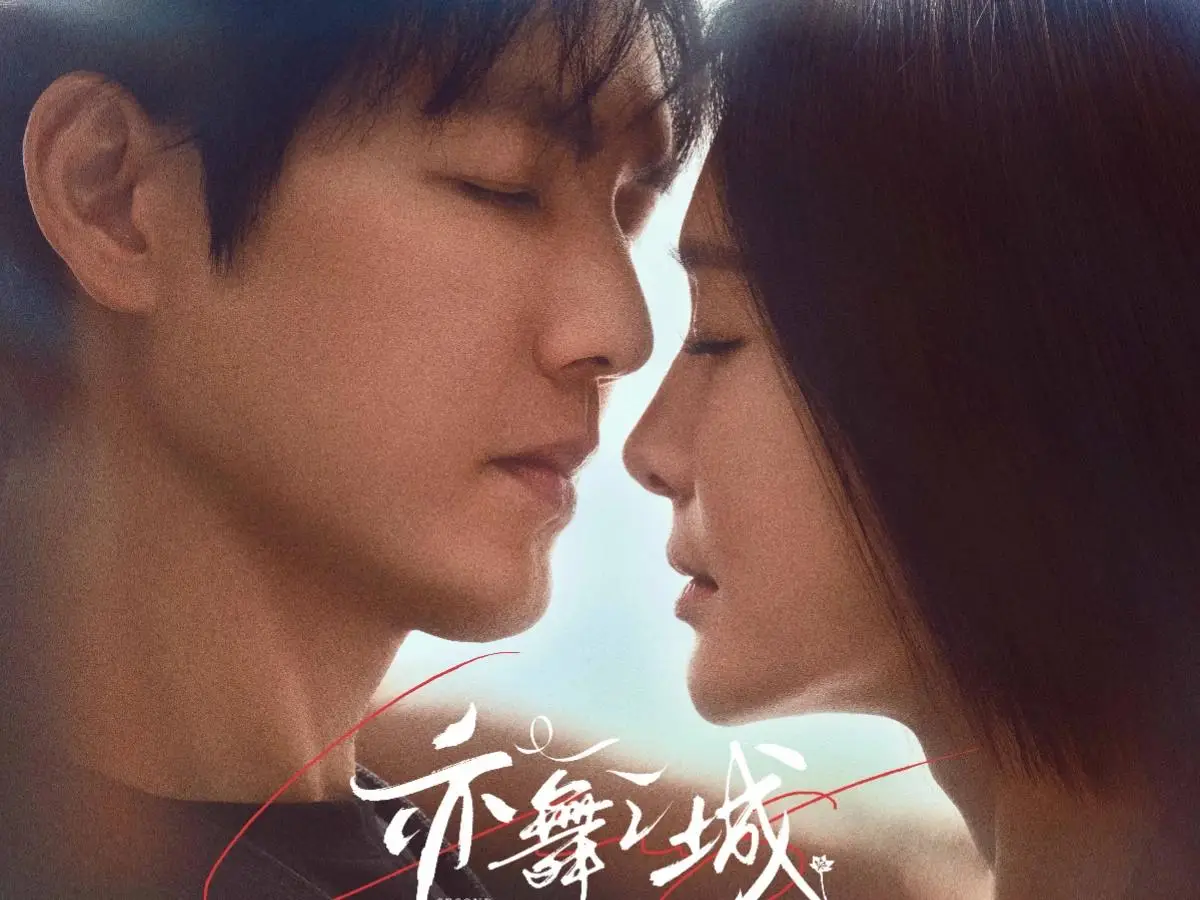
What would you say to a former lover after twelve years apart? City of Dance turns this question into a delicate psychological game.
Tan Siting, played by Qin Lan, and Feng Rui, played by Wallace Chung, reunite in their hometown after twelve years apart. By now, Tan has become an internationally renowned ballet artist, while Feng is a successful winery owner with a fiancée he is about to marry. It seems everything that needed to be left behind has been left behind-except for the lingering embers in the way they look at each other, not yet fully extinguished.
The pacing of this drama mirrors the emotions of adults-restrained, subtle, with undercurrents beneath the surface. There are no exaggerated dramatic conflicts, only quiet conversations across tables in restaurants, brief pauses during chance encounters on the streets, and those silent moments filled with unspoken words. The most compelling aspect is the exploration of the "unfinished complex": their separation years ago due to misunderstandings, the child that never had the chance to be born-a shared, unspoken pain in their hearts. These unfinished events act like magnets, drawing them back to the past time and again.
However, The City Also Dances doesn’t simply follow the cliché of rekindling a lost love. It is more interested in exploring this question: when two people, changed by time, meet again, do they love the person as they are now, or the phantom from their memories?
Tan Siting and Feng Rui are both cautiously testing the waters-not only probing each other's feelings but also exploring their own hearts. They need to discern whether that intense attraction is a rekindling of old flames or a persistent attempt to make up for the regrets of youth.
There is a particularly memorable scene in the drama: the two meet outside the dance studio of their alma mater. Tan Siting watches the young students practicing inside through the glass and softly says, "We can never go back." After a moment of silence, Feng Rui replies, "But we can start anew from here." This exchange perfectly captures the core challenge of dealing with past relationships-acknowledging that the past is gone while determining whether there is enough "present connection" to support a new beginning.
Recommended by 2RedBeans Matchmaking Consultants:
This is a sobering recommendation from 2RedBeans advisors, especially for readers who still have unresolved feelings about an ex or are facing the choice of rekindling an old flame. It reminds us that "nostalgia" is a powerful emotion, but it is by no means a sufficient reason to restart a relationship. Before considering reconciliation, we strongly recommend conducting a thorough "relationship audit": ask yourself three questions-have the issues that led to the breakup truly been resolved or can they be addressed now? Are your respective paths of growth compatible? Are you attracted to who they are now, or to the idealized memories you hold? Only when you are drawn back together based on your current "compatibility," rather than to fill the regrets of the past, can this relationship potentially have a new and healthy future.
4. Why Is He Still Single: Not Settling Is the Highest Form of Respect for Love
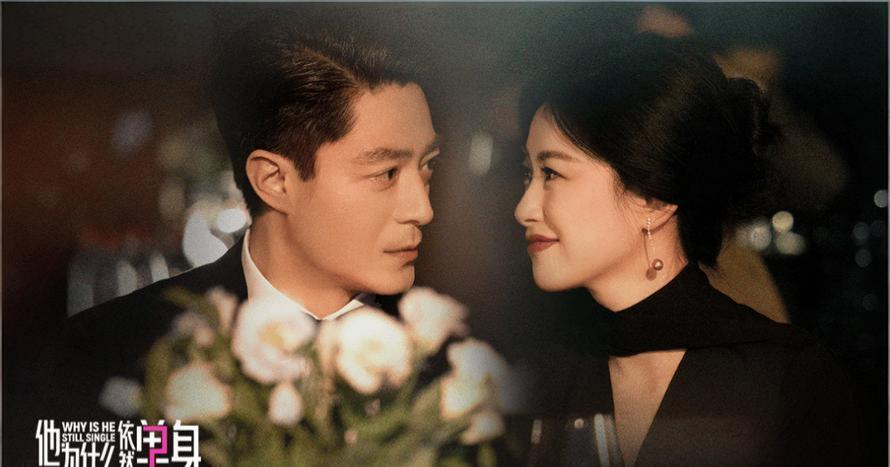
In an era that champions "finding a partner," choosing to remain single requires courage and a clear sense of self-awareness. Why Is He Still Single portrays a convincing image of an "actively single" individual, exploring the modern concept of "compatibility-based love."
Huo Jianhua's portrayal of Yu Yu is practically the blueprint for the "perfect bachelor"-a successful interior designer with a refined and orderly life, complete with his own hobbies and social circle. He isn't lacking in charm or opportunities but holds exceptionally high standards and demands for relationships. This refusal to settle, which others might see as pickiness, is, for Yu Yu, a form of respect for love.
That is, until he meets Gu Yejia (played by Zhu Zhu), an equally independent, rational, and discerning doctor. Their meeting and growing understanding of each other unfold like a slow, precise tango. Every step is cautious and deliberate, every move closer accompanied by careful evaluation of boundaries and compatibility. The show avoids the frenzy of love at first sight, focusing instead on the quiet recognition between two mature souls as they gradually draw near-"Ah, so you were here all along."
The most subversive idea in this drama is its redefinition of "being single" from a problem to be solved into a conscious, positive choice.
Yu Yu and Gu Yejia both lead rich and fulfilling lives on their own. For them, love is not a necessity to fill a void, but a luxury that enhances an already beautiful life. Precisely because of this, when they choose to be together, their relationship is exceptionally strong-not because they need each other, but because they genuinely admire one another.
Why Is He Still Single? addresses a contemporary dilemma: in an era of heightened self-awareness, how do we balance the desire for independence with the longing for intimacy? The show’s answer is: first become a complete individual, then seek another complete individual, and together create the possibility of 1+1>2.
Recommended by 2RedBeans Matchmaking Consultants for the following reasons:
We recommend this series to all single readers who feel anxious under the pressure of "finding a partner." It perfectly illustrates the idea we have always advocated: love should be the "icing on the cake," not "help in times of need." The charm of Yu Yu and Gu Ye Jia first stems from their complete and self-sufficient ability to be alone. Our advice is to prioritize investing the energy spent urgently seeking a partner into building a life that satisfies you: deepening your career, nurturing hobbies, and expanding a high-quality social circle. When you become a "high-value individual" who is emotionally, financially, and spiritually self-sufficient, you will not settle out of fear of loneliness and will naturally attract mature souls who appreciate your essence. Only by becoming a complete circle can you meet another complete circle.
From Screen to Reality: Making Your Love Story Even More Exciting
The reason these four series resonate so deeply is that they touch on the real challenges each of us faces in love: building trust, pursuing equality, reconciling with the past, and achieving self-completion.
When resonance and reflection while binge-watching remain confined to the screen, it feels somewhat regrettable. True emotional growth occurs when we bring these insights into real life. The next time you feel uneasy in a relationship, perhaps you can think of Li Xiaoxi's story and ask yourself: Does my unease stem from the other person's actions, or from the fears within my own heart? When facing a relationship with differences, you can recall the interactions between Cen Jin and Li Wu, and examine whether there is genuine, equal dialogue between you.
2RedBeans has always believed that the best love stories are not merely watched but personally experienced. However, watching good stories can give us the courage and wisdom to write our own, more wonderful chapters. No matter which stage of emotion you are currently in-single, in a relationship, or at a crossroads in a certain connection-we hope these stories and perspectives can offer you some inspiration.
Because ultimately, each of us is the author of our own love story. And every more conscious choice makes that story even more touching.
Cover Photo by yousafbhutta on Pixabay.
Original article in simplified Chinese. Translated by AI.