2RedBeans
Can Long-Distance Relationships Actually Last? Hard-Won Lessons From Couples Who Made It Work
New York to San Francisco: 2,570 miles. Three hours of time difference. A $300+ plane ticket.
But none of that can stop two people who actually want to find each other.
On 2RedBeans, long-distance relationships are far from rare. Chinese Americans in North America are scattered — you're in the Bay Area writing code, she's in New York doing finance; you're in Chicago finishing your PhD, he just started a job in Seattle. The right person often isn't in the same zip code. That's just the reality.
So can long-distance actually work? We're not going to give you a simple yes or no. Instead, we want to show you how the couples who actually made it — made it.
Story 1: Friday Night FaceTime Carried Them Through 14 Months

W, 29, works in biotech in Los Angeles. J, 31, is in Boston in medical devices. They matched on 2RedBeans, video chatted for three weeks, and then J flew out to LA. Their first in-person date went until 2 AM.
Then J flew home. Reality hit.
The first three months, they called almost every day. By month four, J's project entered crunch mode — he was regularly working past 11 PM Eastern. That's 8 PM Pacific. W would finish dinner, pick up her phone, and get: "So exhausted tonight. Can we talk tomorrow?"
W told one of our matchmaking consultants something that stuck: "It wasn't that I didn't understand he was busy. I was scared of slowly becoming less important."
They made an adjustment. Instead of trying to connect every single day, they locked in every Friday night as their standing "date night." Video on, each ordering delivery, watching the same show. Sometimes they'd talk for hours. Sometimes they'd just sit there in comfortable quiet, doing their own thing — but together.
Fourteen months later, W got a job offer in Boston. She said the decision to move wasn't that hard. "Because we'd already proven the relationship was worth it."
What Our Consultant Says
The turning point for W and J was shifting from random connection to ritual connection. The biggest enemy of long-distance isn't miles — it's attrition. When you force yourself to call every day, it starts to feel like homework, and you burn out. In years of consulting, the couples who last almost always have some version of a fixed "us time" — not about frequency, but about both people taking it seriously.
Story 2: After Six Flights, She Said "I Don't Want to Live Like This Anymore"

C, 27, Seattle. She met K, 32, a private equity guy in New York, on the platform. They clicked hard — K flew out to see her for the first three visits. She flew to New York three times. Six cross-country flights in six months.
Sounds romantic, right? C's exact words: "Every visit felt like a vacation. But what I actually wanted was a life."
She noticed a pattern: because time together was precious, they were both performing their best selves. No arguments. No talking about difficult stuff. Only nice restaurants. Then the moment they went back to their separate cities, all the real questions — who moves, when, what happens after — got shelved. K's answer every time: "Let's see how things go."
C never booked the seventh flight.
What Our Consultant Says
This is one of the most common traps in long-distance: "vacation mode." Short visits push both people to avoid conflict and just enjoy the moment. It feels great short-term. Long-term, it's dangerous — because the questions that actually determine whether the relationship has a future keep getting postponed.
Our advice is direct: long-distance needs an endgame timeline. You don't have to have a moving plan on date one. But if you've been together six months and have never seriously discussed "how do we eventually stop being long-distance" — that's a warning sign. A relationship without a direction is just spending down two people's patience and trust.
Story 3: They Managed Their Long-Distance Relationship With a Google Sheet
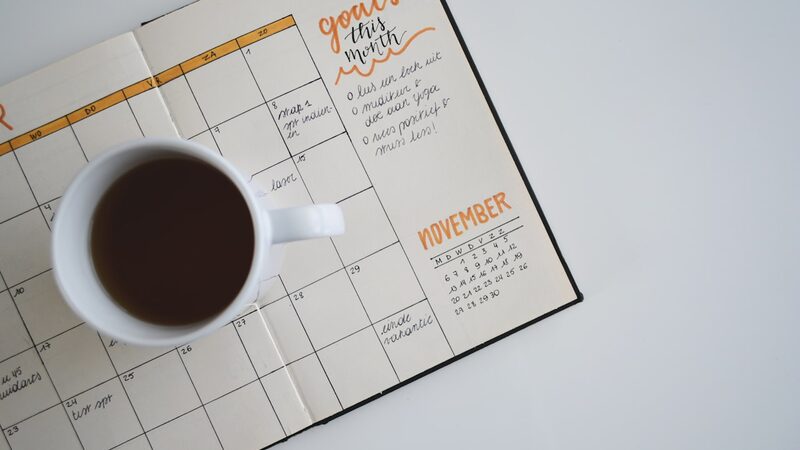
This one made our whole team laugh when we first heard it — in the best way.
Penny, 30, software engineer in the Bay Area. Boyfriend David, 28, also an engineer, in Austin. Two STEM people in a long-distance relationship. Naturally, their approach was different.
They built a shared Google Sheet with a few tabs:
- Visit Schedule — next three months of travel plans, who's flying, flights, where to stay
- Life Updates — important things happening in each person's work and life, so neither one ever had to say "oh, I forgot to tell you about that"
- Future Plan — a running record of conversations about moving, career timelines, and milestones
Penny: "A lot of people think this is unromantic. For us, having everything visible actually reduced so much anxiety."
David said something that really stuck with us: "The thing that damages long-distance relationships isn't distance. It's information gaps. She doesn't know what I've been dealing with; I don't know what's on her mind. Then you start guessing, and that's when things go sideways."
A year later, David got a Bay Area offer. The last line in their Google Sheet read: Closed — same city now :)
What Our Consultant Says
These two did something exactly right: they turned uncertainty into visibility. The most exhausting thing about long-distance often isn't the missing — it's not knowing. Not knowing what the other person is up to, not knowing where the relationship is heading, not knowing whether your effort is being seen.
The tool doesn't matter. Not everyone needs a spreadsheet. Some people send a daily voice memo. Some people share a calendar. Some people do one long call a week. The underlying logic is the same: find a way to make each other feel seen. That's the whole game.
Story 4: His Parents Were a Harder Obstacle Than the Miles

L, 34, Houston, oil industry, traditional family. Met S, 30, marketing, based in Vancouver, on 2RedBeans. Things moved fast — they made it official within three months.
The problem was L's parents.
Their reaction: "Why not someone local? Vancouver is Canada — what happens long-term?" His mom was more direct: "You two are flying back and forth — where does it end? Why not just find a Houston girl and have a normal life?"
L was caught in the middle. He didn't tell S what his parents were saying. He carried it alone. Until one day S asked, "Have you mentioned me to your family?" L went quiet for three seconds. S got the full picture from those three seconds.
After talking with our consultant, L did one thing: he arranged for S to have dinner with his parents during a visit — not a formal "meeting the parents" situation, just a low-key home-cooked meal. S's warmth, her easy confidence, her fluent Mandarin — after that dinner, L's mom called him and said, quietly: "She's actually… pretty good."
What Our Consultant Says
For Chinese Americans, long-distance relationships often have two hurdles: the one between the couple, and the one between two families. A lot of parental resistance isn't really about the person — it's anxiety about uncertainty. Parents need to see that the relationship is serious, that it has a direction, that it's actually moving forward.
Our advice: don't avoid the family conversation, but don't rush it either. Let the relationship itself get solid first. Then find the right moment for parents to actually encounter your partner. One meal, one natural interaction, does more than a hundred phone explanations.
5 Rules From People Who Actually Survived Long-Distance
Based on years of walking alongside long-distance couples, here's what actually holds up:
Rule 1: Have an endgame in mind. Long-distance is the means, not the goal. From day one, know the answer to: how do we plan to stop being long-distance?
Rule 2: Create fixed rituals for connection. Don't chase daily closeness — just have a standing, sacred "us time." Once a week is fine. The point is that you both treat it as non-negotiable.
Rule 3: Proactively share your life to close the information gap. Don't wait to be asked. Your boss was annoying today. You found a ramen spot you loved. You saw an absolutely unhinged pigeon on your walk home. This kind of mundane sharing is what actually closes the distance.
Rule 4: Allow yourselves to argue in person. Visits don't have to be perfect. Being able to discuss real problems and express real frustrations during limited face-time means the relationship is healthy. Couples who can only be sweet in person are building on sand.
Rule 5: Make decisions together, not alone. Who moves. When. What gets sacrificed. These questions have to be faced as a team. One person quietly bearing all of it will eventually reach a breaking point.
FAQ
Q: How often should long-distance couples see each other?
A: There's no magic number, but what we've observed in healthy long-distance relationships is roughly once every 4–6 weeks. More frequent and there's financial and schedule pressure; less frequent and emotional distance starts creeping in. More important than frequency is predictability — having the next visit already planned is far more stabilizing than a vague "we'll figure something out."
Q: Who should be the one to relocate?
A: There's no "should." It comes down to whose career has more flexibility, whose life is easier to rebuild in a new city, and who has a higher tolerance for the disruption of moving. What we want to avoid is one person carrying the frame of "I sacrificed so much for you" — because that's not a sacrifice, it's a shared decision that needs to be made together. If you can't reach alignment, a professional matchmaking consultant can help you work through it.
Q: Is it worth pursuing someone long-distance on 2RedBeans?
A: Yes — but go in with clear eyes. The Chinese American dating pool in North America isn't huge. Passing on someone genuinely compatible just because they're in a different city is a real loss. The key is having an honest conversation early about whether long-distance is something both of you are willing to navigate, and what each person's limits are. A lot of couples who eventually moved in together told us their biggest relief was: "We didn't give up just because of the distance."
Long-distance is hard. But "hard" and "impossible" aren't the same thing. The gap between them is method, patience, and a shared commitment from two people who've decided the other person is worth it.
If you're in a long-distance relationship feeling lost — or you've just matched with someone in another city and aren't sure whether to try — 2RedBeans' matchmaking consultants are here. We've walked alongside too many couples who went from two cities to one home. We'd love to see your story through to the end.