2RedBeans
How to Build Secure Attachment: 7 Behaviors You Can Practice
She stared at the message box, her heart hammering like she'd just finished a sprint. His text came through: "I need some time alone for a few days." Her fingers were already typing: "Does this mean you don't love me anymore?" She'd said that line before—too many times. The ending was always the same: the fight, the stonewalling, the apology, then another fight. But this time she deleted it. She rewrote: "Okay, I hear you. Take the space you need. I'm here if you want to talk this weekend."
She flipped her phone face-down and didn't look at it for hours. The next morning, his response was waiting: "Thank you for not pushing me. I'll reach out when I'm ready." Years later, she'd tell me that was the moment she realized something: maybe she didn't have to blow this up.
Plenty of people take an attachment style quiz, see "anxious" or "avoidant," and instantly let themselves off the hook: I'm just wired this way. I can't change it. But secure attachment isn't a card you're dealt at birth. It's more like a playbook you can learn—a set of behaviors you can practice into existence.
Secure Attachment Isn't Innate
 Photo by Ylanite_NietjuhArt on Pixabay
Attachment theory does emphasize that early experiences shape a lot. How you were responded to as a child does influence how you show up in intimate relationships later. But here's what gets left out of most pop-psychology articles: your attachment style at 35 isn't sealed in concrete at 18.
I've seen plenty of people who started out intensely anxious calm down after six months of practice—suddenly capable of telling a partner, "I need some space without any drama." I've watched avoidant people sit with conflict for the first time, instead of disappearing. They'd say, "I'm still here. I'm not leaving."
The shift isn't always from anxious to secure. It's that you suddenly have a choice. Before, you could only pursue or run. Now you can pause.
Seven Behaviors You Can Practice
 Image generated by Gemini Nano Banana
These seven things won't make you a perfect person. But they'll make your behavior in relationships safer—more like someone who actually feels secure. You don't have to nail all seven at once. Pick one or two. Practice for six to eight weeks. That works better than reading all seven and doing nothing.
1. Ask for what you need directly—don't make your partner guess
Secure people aren't needless. They just believe it's safe to ask.
Anxious types usually broadcast their needs through anger, hurt feelings, rapid-fire questions—really saying, I need to know you're still here for me. Avoidant types don't say anything at all; they bottle it until one day they snap the door shut.
You want your partner to stay for dinner tonight. But when the words come out, it's: "Whatever, do whatever you want." Then he actually says, "I'll grab something on my own," and suddenly you're spiraling: He doesn't care about me.
What secure looks like: "I'm exhausted today, and honestly I'd like you here with me for a bit. You don't have to fix anything—just sit with me."
What not to do: Say nothing, freeze him out when he guesses wrong, then hold it against him.
2. Make a repair move after conflict
Arguing is built into relationships. The difference is what you do after.
S and her boyfriend got into it about wedding gift amounts. She was hurt enough that she didn't speak for the rest of the night. The next morning, she texted: "I got heated yesterday, but I don't want this hanging over us. Can we talk through the budget again tonight?"
He told her later that text disarmed him instantly. He wasn't braced for a second round.
A repair move doesn't have to be big. It can be handing over a water glass, sending a meme, or just saying, "We're still good." The point is signaling: I haven't abandoned this. I'm still invested. Every time you skip the repair, you're building a wall. Every time you make one, you're proving something true to your partner: You won't lose me over this.
3. Negotiate your rhythm of contact and space
This is where anxious and avoidant people get stuck in the same groove: one needs constant confirmation; the other needs to vanish whenever they feel cornered.
Secure partners don't let either person win. They make "how often we check in" into something you can actually discuss.
You want a video call every night. He needs a quiet hour after work. Instead of, "You don't even care about me," try this:
"I know you need time to decompress after your day. I get that. But I also need a little reassurance—it helps me feel connected to you. What if we locked in a video call at ten for ten minutes? And the rest of the time, I won't check on you?"
The genius of that sentence is it admits neither person's need is shameful. It's not a compromise where both of you lose. It's a design you both chose.
4. Use "I" statements instead of accusations
"You never text me back" sounds like an indictment. His first instinct is to defend: "I do text you back!"
"I" version: "When I send you something and don't hear back for a while, I start to feel unsettled. Would you be willing to give me a heads-up if you're slammed?"
The first one attacks. The second one exposes something real. Secure people don't use guilt to get attention. They name what's actually happening inside them.
5. Separate facts from fear-stories
This one feels counterintuitive: secure people also catastrophize. They just know they're doing it.
A used to spiral instantly. Her boyfriend texted slowly during a work happy hour, and in her head, she was already writing the subplot where he was reconnecting with an ex. Eventually she taught herself a simple practice: write down two columns.
Facts: He's been quiet for three hours. He mentioned a team thing today.
Fear: Maybe he's falling out of love. Maybe I'm not enough.
Once she saw them as separate, her choices changed. She'd act based on facts, not on fear.
6. Tolerate uncertainty—don't force your partner to answer right now
Anxious people desperately want the guarantee: Will you still love me tomorrow? What about next month? Are we getting married? But humans aren't contracts.
Secure people can sit with not knowing, without treating "not yet" as rejection.
Next time you want to ask, "What are we doing long-term?" try: "I'm going to tell you what I'm worried about. And you can take your time thinking about it. I don't need an answer right this second."
This doesn't mean you wait forever. You can have boundaries. But you're giving your partner room to think, instead of squeezing an answer out of them when they're upset.
7. Build stability that has nothing to do with your relationship
This one's unglamorous but possibly the most useful.
When you hinge all your security on your partner, you make their emotional load unsustainable—and you stay fragile.
Do you have regular friends who matter to you? A physical practice? A work rhythm you actually value? Can you get through an evening alone without checking his read receipts?
Secure people don't need less from relationships. They just aren't drowning when they show up. They're not clutching a life raft. They come with their own boat. You can start small: protect one night a week just for you. Don't cancel it every time something romantic comes up.
If You're Anxious: Start Here
If you test as anxious, don't spread yourself thin trying to practice all seven. Start with #1 (ask directly) and #6 (tolerate uncertainty).
The core anxious pattern is: He's going to disappear, so I need to hold on as hard as I can. You use pressure to prevent abandonment.
Practice #1 first because underneath most of your emotional meltdowns is an unspoken need. Say it out loud. Practice #6 because you need to slowly learn: I can express myself and not immediately lose him. The relationship doesn't collapse when you're not pushing.
If You're Avoidant: Start Here
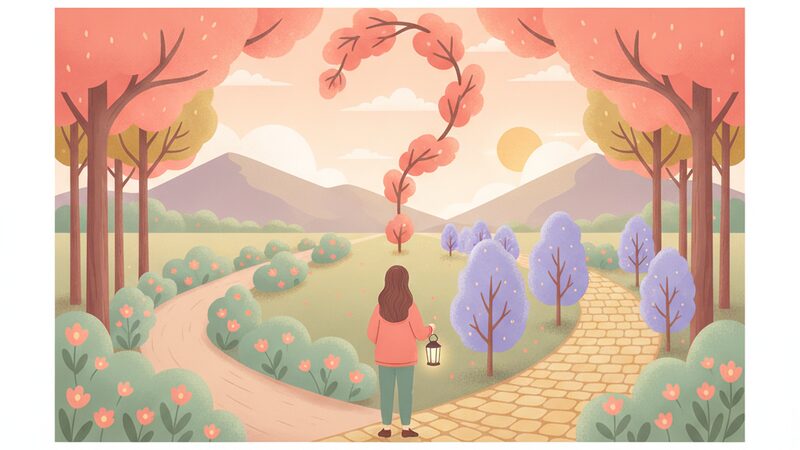 Image generated by Gemini Nano Banana
If you test as avoidant, start with #2 (repair after conflict) and #3 (negotiate your rhythm).
Your core pattern is: I feel swallowed up, so I need distance to protect myself. You use disappearing as a boundary.
Practice #2 first because you're likely used to shutting down after fights, and every time you do, it erodes their trust. Practice #3 because you need to learn: Contact doesn't equal loss of control. A plan actually protects your space.
Six to eight weeks on two behaviors beats jumping into all seven and quitting in week two.
Should You Just Find a Secure Partner Instead?
 Photo by Mohamed_hassan on Pixabay
I get asked this one regularly as a matchmaker. And the honest answer: yes, it would be faster. But.
A genuinely secure partner does act like scaffolding. When you're anxious, he doesn't get swept away by your panic. When you're avoidant, he doesn't chase you into a corner. Over time, his stability starts to rub off—not because you read articles about it, but because you feel it.
The trap is expecting him to be your therapist. If you dump everything on him and expect him to catch it every time, that debt builds. Secure people attract secure people—not because they're martyrs, but because they're looking for a peer.
And here's what doesn't disappear: your first instinct probably still fires. You'll feel the anxiety spike. You'll still want to run. That stuff is deeper. But what can change is what you do next. Like someone with a fear of heights—they still get scared on the balcony. They just learned not to freeze up.
The real metric: are you treating him as a partner or as a doctor? The second one fails. The first one lets both of you grow.
In Closing
That girl from the start? She didn't stop getting scared. Later, she cried. She had moments of He's actually leaving me. But that one text—"Thank you for not pushing"—became evidence of something real: If I don't force it, it doesn't fall apart.
Secure attachment isn't the absence of falling apart. It's knowing what to do when you do.
If you're stuck thinking I'm probably just built anxious/avoidant, you don't have to accept that label forever. Try one different response. Just one. See what happens.
Want to get clearer on your attachment style and which two behaviors to prioritize? Our matchmakers can walk you through it one-on-one.
We've written deeper dives into the other two types: Anxious Attachment: The More You Fear Losing Them, the More You Push Them Away and Avoidant Attachment: Why They Run When You Get Close. This piece rounds out the roadmap.
Frequently Asked Questions
Can you develop secure attachment as an adult?
Yes. Attachment style isn't a fixed personality trait. Early experiences matter, but they're not destiny. Your relationships as an adult—and your own practices—keep shaping how you show up. More accurately: you can build a secure attachment style through behavior change. Your first instinct might not disappear entirely, but you'll have more and more choice in what you do next.
What should anxious and avoidant types prioritize?
Anxious people should focus on "asking directly" and "tolerating uncertainty"—it breaks the cycle where you push hard to prevent abandonment. Avoidant people should focus on "repair after conflict" and "negotiating your rhythm"—it breaks the pattern where you disappear to protect your boundaries. Pick two, not all seven. Six weeks beats giving up after three days.
How do you spot a secure partner on a dating app?
On our platform, we see that secure people don't attract through grand gestures—they attract through consistency. Watch how someone responds when you say, "I need some space," or "I'm not feeling great." Do they panic? Vanish? Or do they actually listen first? The people actively dating on our platform show their real behavior—it's more meaningful than any quiz score.
Cover image generated by Gemini Nano Banana