2RedBeans
Gaslighting 101: 6 Phrases That Make You Question Reality—And How to Respond
You hear something that stings. You ask about it. Your partner gives you an innocent look: "You're being way too sensitive."
You freeze. Did you overreact? You replay it in your head, trying to figure out if maybe you imagined the edge in their voice.
You let it go. But then it happens again a few days later. Same pattern: something bothers you, you bring it up, and suddenly you're the problem—not what they did or said, but the fact that you felt something about it.
That's gaslighting. And it's designed to make you stop trusting what you actually perceive.
What is gaslighting, anyway?
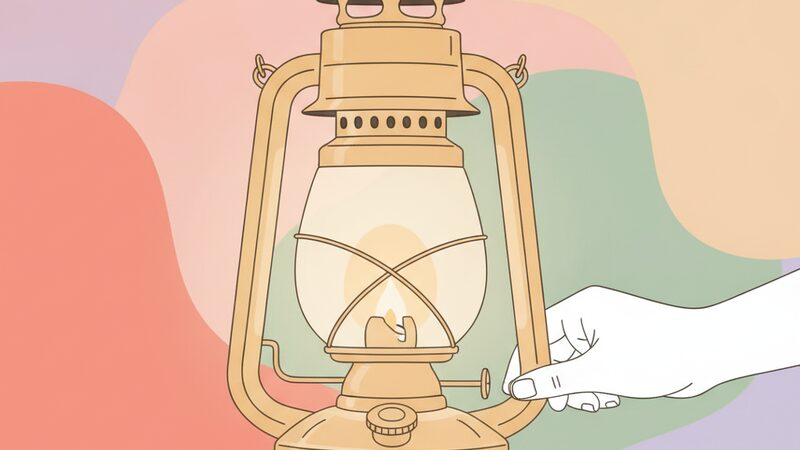 Image generated by Gemini Nano Banana
The American Psychological Association defines gaslighting as "to manipulate another person into doubting their perceptions, experiences, or understanding of events." Notice the word manipulate. It's not about clearing up a misunderstanding. It's about making you lose confidence in your own judgment.
Over time, this creates what psychologist Robin Stern (co-founder of the Yale Center for Emotional Intelligence) calls the gaslight effect—a cumulative doubt that starts to poison how you see reality. You start second-guessing not just this one moment, but everything.
Where does the term "gaslighting" even come from?
It traces back to a 1938 stage play called Gas Light by Patrick Hamilton, later adapted into a 1944 film. In the story, a husband creates noises in the attic while dimming the gas lamps in their home. When his wife asks if the lights are getting darker, he insists they're not—and that something must be wrong with her eyesight.
Over time, she stops trusting her own perception entirely.
That's the core of gaslighting: it's not just about the facts being disputed—it's about making someone doubt whether they can trust their own mind. The name stuck because it perfectly captures the experience: watching reality get dimmed right in front of you while someone tells you the lights are fine.
The 6 most common phrases used in gaslighting
 Image generated by Gemini Nano Banana
These statements, taken alone, can seem harmless. But when they're repeated in an unequal relationship, they start to chip away at your sense of reality.
"You're too sensitive."
This one shifts focus from what he did to how you felt. It doesn't address the facts—it just slaps a label on you. Suddenly, your emotional response becomes the problem, not his behavior.
"I never said that."
If he definitely said it but keeps denying it, you'll start to doubt your memory. It's disorienting in a way that fights can't touch—because now you can't even agree on what happened.
"Everyone thinks it's your problem."
He invokes some vague "everyone" without ever naming a single person. You don't fact-check it (because what if you're wrong?) and you definitely don't ask around (too embarrassing). Now you feel isolated, convinced the world agrees against you.
"I'm doing this for your own good."
Control gets dressed up in kindness. How do you argue with someone claiming to help you? You end up accepting things you never wanted to accept because pushing back feels ungrateful.
"You're doing it again."
This one redefines every conflict as you losing it, not you both having an issue. Suddenly there's no actual problem to discuss—just you "starting up" again. He's not engaging with what you said; he's dismissing it as part of a pattern.
"You're misremembering."
Similar to "I never said that," but more direct. After enough repetitions, you start to doubt your own recollection before anyone else even challenges it. You fall into the habit of second-guessing yourself.
The common thread? None of these engage with facts. They all attack your ability to perceive facts.
Psychologist Harriet Lerner, in Why Won't You Apologize?, points out that statements like these are "pseudo-apologies" in disguise—they shift responsibility back to you, swap "I was wrong" for "you're too sensitive," and make it look like someone's actually engaging when they're really just rewriting the story. Recognizing the pattern beats arguing about intent.
How is gaslighting different from just having a bad fight?
People say harsh things in arguments. Sometimes both people say "you're too sensitive." The difference isn't the words—it's frequency and direction.
In a normal fight, even a heated one, there's usually a reset. Once things calm down, you can fact-check what was said. Both of you can acknowledge, "Yeah, I said that" or "I didn't mean it that way." Gaslighting isn't one fight—it's a chronic, one-way rewrite of reality. It moves you from "we had a disagreement" to "maybe I actually am the problem."
One reliable signal: if you're starting to make excuses for him before conflict even happens, or if you're stuffing down your own feelings to keep the peace, you've crossed into something beyond a typical argument.
Is gaslighting the same as stonewalling?
No. Stonewalling is silence; gaslighting is rewriting reality.
Stonewalling means he won't engage—he shuts you out, refuses to talk, leaves you anxious in the quiet. Gaslighting does the opposite: it uses words to tell you that what you're saying is wrong, that what you remember is inaccurate, that what you felt doesn't matter.
One suffocates through absence. One hurts through negation.
They can happen in the same relationship, but they wound differently. For more on how stonewalling can erode a relationship, check out our piece on silent treatment and breakups.
Is gaslighting something only people with narcissistic personality disorder do?
 Image generated by Gemini Nano Banana
No. Gaslighting is a tactic—something someone does in an interaction—not a personality diagnosis.
People with NPD may be more prone to it, sure. But gaslighting also happens in everyday relationships where one person has more power, more control, or more invested interest in winning the argument. Sociologist Paige L. Sweet's 2019 research shows that gaslighting isn't just a personal-psychology issue—it's often embedded in social power imbalances, and it flourishes in intimate relationships where one person has significantly more leverage.
Separating gaslighting from NPD isn't about letting anyone off the hook—it's about recognizing the tactic itself. If you suspect your partner isn't just occasionally saying these things, but is operating with a deeper pattern of manipulation or self-centeredness, our piece on narcissistic partners goes deeper.
How to respond if someone uses these phrases on you
First: write things down.
Not to play detective, but to anchor your reality. Jot down what happened—the date, the exact phrase, the context. You're not collecting ammo to throw back at him; you're building a record you can refer to later. Many people who've been gaslit for years say their biggest fear isn't their partner—it's "I can't even keep track of what actually happened." A record fixes that.
Second: find one trusted reality check.
Trade in vague "everyone" for one specific person. A friend, family member, or anyone with no stake in your relationship. You don't need to spill your whole history; just key moments. Sometimes all you need to hear is: "No, that makes sense. You're not crazy."
Third: shift from "I feel" to "I remember."
"I feel like you said that" sounds subjective and easy to dismiss. "I remember you telling me this on Tuesday…" is a factual statement about your memory. He can deny it, but at least you've staked a clear claim to your version. Your memory and his memory can differ without one of you being fundamentally broken.
Fourth: know when to stop trying to convince him.
If he keeps denying, switching topics, attacking your emotions, or if you keep hoping that more evidence will finally earn you an "I was wrong"—stop. The gaslighting thrives on your attempts to prove yourself. The real issue isn't who remembers correctly; it's whether this relationship lets you trust your own mind.
Quick Reference: The 6 Phrases and How to Respond
These aren't comebacks. They're ways to protect your grip on reality.
| He says | You can say |
|---|---|
| "You're too sensitive." | "My sensitivity doesn't change what you said. Here's what I heard: …" |
| "I never said that." | "I remember you saying this… If you don't remember it that way, let's get straight on what actually happened." |
| "Everyone thinks it's your problem." | "Who's 'everyone'? I need actual names and actual quotes, not a made-up consensus." |
| "I'm doing this for your own good." | "If it's really for my good, ask me what 'good' means to me. I'm not accepting blame disguised as care." |
| "You're doing it again." | "Are you trying to have this conversation, or are you trying to shut me down? If it's the latter, we're done talking." |
| "You're misremembering." | "Here's what I remember… If you remember differently, we can look at this together—not just accept what whoever speaks louder says." |
If you've tried clarifying the facts, voicing your version, and he keeps repeating the denial—to the point where you're starting to lose confidence in yourself—it might be time to focus on reclaiming your grip on reality first.
Book a 1-on-1 consultation with a 2RedBeans matchmaker
Frequently Asked Questions
1. Is gaslighting the same as PUA (pickup artist manipulation)?
Not quite. PUA is a broader playbook that might include put-downs, hot-and-cold behavior, creating dependency—gaslighting is one specific tactic within it, focused on eroding someone's sense of reality. You can gaslight without running a full PUA script.
2. Does gaslighting only happen in romantic relationships?
No. It can show up anywhere there's a power gap: family dynamics, work situations, friendships. Any relationship where one person gets to define what's real, and the other slowly stops trusting their own perception—that's gaslighting territory.
3. What do people who've been gaslit typically feel?
Common ones: always apologizing, convinced you did something wrong, second-guessing your memory before anyone else questions it, afraid to tell friends details because you worry they'll think you're overreacting, slowly losing trust in what you see and hear and remember. If you recognize these patterns, it's worth stopping to really look at what's happening.
Sources
 Image generated by Gemini Nano Banana
- American Psychological Association Dictionary entry on "gaslight"
- Robin Stern, The Gaslight Effect (2007)
- Paige L. Sweet, "The Sociology of Gaslighting," American Sociological Review, 2019
- Britannica entry on "gaslighting"
- Harriet Lerner, Why Won't You Apologize?: Healing Big Betrayals and Everyday Hurts—on how pseudo-apologies and denial work their damage.
Cover image generated by Gemini Nano Banana