2RedBeans
Avoidant Attachment: Why the Closer You Get, the More They Pull Away
Things start out great. Every conversation pulls you a little closer, until you reach the point where you want to take the next step — and out of nowhere, they cool off. Texts get shorter. You start seeing each other less. And then comes the line, with zero warning: "I think I just need some space right now." So you replay everything, hunting for the thing you did wrong. Spoiler: there wasn't one.
If that script feels familiar, the problem probably isn't you — and it isn't "they don't love you," either. It's a pattern called avoidant attachment. Once you can actually see it, you stop bouncing between the two moves that both backfire: chasing harder, or walking away for good.
What Avoidant Attachment Actually Is
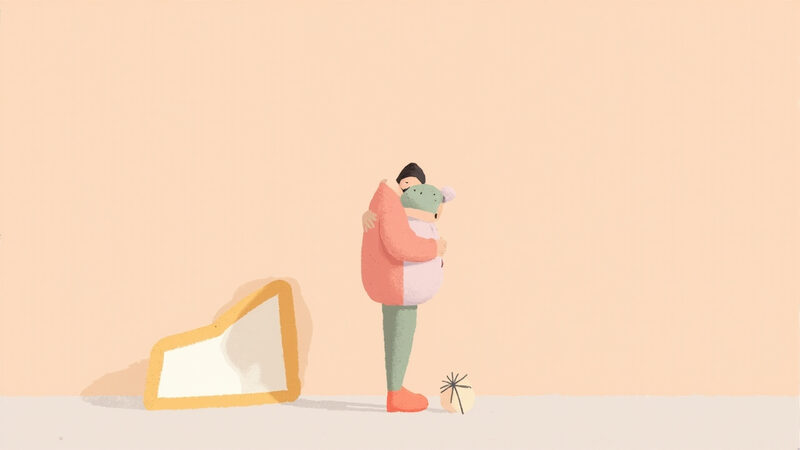 Image generated by MiniMax
The one-sentence version: avoidant attachment is a pattern where someone keeps a little distance in order to feel safe in a relationship — and the moment things get close enough that they'd have to lean on you, they instinctively back away. It's not that they don't care. It's that "too close" trips an internal alarm they didn't consciously set.
To really get it, you need to know what attachment styles are in the first place. Last century, psychologists studying babies and their caregivers noticed something: in our closest relationships, we each develop a set of automatic reactions — and as adults, those same reactions play out, beat for beat, when we fall in love. That's attachment theory. It isn't astrology; it's a psychological framework with decades of research behind it.
Adult attachment sorts roughly into four types:
- Secure. Can get close, can also stand on their own. Asks for what they need, and repairs things after a fight. About half of people land here — and they're by far the easiest to be with.
- Anxious. Craves closeness intensely, and lives in fear of being left. At the first hint of trouble, they need to hear "you still love me, right?" — immediately.
- Avoidant. Prizes independence to the point of being wary of intimacy. The deeper a relationship gets, the more they instinctively retreat. Their default setting is "I'm safest relying on myself."
- Disorganized (sometimes called fearful-avoidant). Wants closeness and fears it at the same time — hot then cold, tangled up even to themselves.
Today we're zeroing in on the one that confuses people the most: the avoidant. Because the anxious type's pain is written all over their face, while the avoidant's pain hides inside the retreat — which makes it the easiest to misread as "they're a jerk" or "they just don't care."
The Core of It: Closeness Reads as Losing Control
Avoidant people aren't naturally cold. The vast majority became avoidant after learning one lesson, over and over, early on: counting on other people is dangerous, and the only truly safe bet is yourself.
So as adults, any time a relationship gets close enough that they'd have to be vulnerable — close enough that they'd actually need you — their body sounds the alarm before their brain even weighs in. It isn't "I don't want you." It's "this is too close, I'm about to lose control." Backing off is how they get their footing again. What you see is someone pushing you away. What they're living is the feeling of going under — and instinctively kicking to the surface for one breath.
This is the piece that changes everything downstream, so sit with it: when an avoidant person pulls back, it's usually not a verdict on you. It's an alarm about closeness itself.
How to Tell If Someone's Avoidant: 5 Signs
 Image generated by MiniMax
The signals tend to show up only after things heat up. Early on they might seem completely normal — even eager. Watch for these:
- The second things move toward "official," they cool off. Defining the relationship, meeting the family, moving in together — every time you inch forward, they somehow find a reason to create distance, nitpick, or "take a beat to think."
- They treat independence like a religion and needing people like a weakness. "I do just fine on my own" is practically a catchphrase. Asking anyone for help makes their skin crawl.
- They dodge every emotional conversation. You try to talk about the two of you, and they either change the subject or shut it down with a flat "you're overthinking this."
- They romanticize what's far away and pick apart what's right in front of them. Suddenly they're nostalgic about an ex, or crushing on someone completely out of reach. It's not that they're fickle — it's that "out of reach" is the safest option there is. You never have to actually get close.
- Present in body, gone in spirit. They show up to everything they're supposed to show up to, but you always feel a pane of glass between you. The room's lively enough — you just can't get in.
One or two of these on their own doesn't make someone avoidant; everyone wants to be left alone sometimes. But if this cluster shows up year in and year out — especially that core "the closer we get, the more they retreat" loop, running on repeat — you're probably looking at it.
How to Actually Be With an Avoidant Partner
This is the most useful part, because most people's gut reaction happens to be the exact move that pushes an avoidant partner further away.
First, don't chase. Avoidant and anxious types fall into the same death spiral so easily: the more anxiously you chase, the more suffocated they feel and the harder they run — and their running cranks up your anxiety, and round and round it goes. The counterintuitive move that actually works: when they pull back, you stay steady and give them room. Your calm is itself a message — it tells them closeness isn't as dangerous as their alarm insists.
Second, be the steady, low-pressure presence. Avoidant people are hypersensitive to anything that feels like emotional pressure. Fewer "why didn't you text me back" interrogations; more predictable, no-strings-attached warmth. Feeling safe is the thing an avoidant person is most starved for — and the thing that actually gets through to them. And that safety comes from steadiness, not intensity.
Third, ask for what you need using "I," not blame. "You never care about me" trips their defenses. "I've had a rough day and I'd love for you to just talk with me for a bit" hands them a specific, doable invitation. Translate the fuzzy feeling into a concrete request, and an avoidant partner is actually far more likely to meet it.
Fourth — and this is the big one — tell the difference between "needs space" and "doesn't respect you." Understanding avoidance is not the same as endlessly excusing stonewalling, being ignored, and long stretches of emotional absence. Healthy space sounds like "I need some time to myself, and then I'll come back." Unhealthy is leaving you stranded to process all of it alone. The first is worth waiting for; the second is a boundary issue. Don't use "they're just avoidant" to rationalize a relationship that keeps hurting you.
What If You're the Avoidant One?
 Image generated by MiniMax
A good chunk of the people who find an article like this are quietly checking themselves against it — "wait, this sounds like me." If that's you: honestly, good. Noticing is the first move that changes anything. Three things you can start practicing right now:
One: catch your "I want to run" moment. Next time things are heating up and you're suddenly desperate to find a reason to pull away, don't act on it. Stop for three seconds and ask: is this person genuinely wrong for me, or did the "too close" alarm just go off again? Just being able to tell those two apart means you're no longer on autopilot.
Two: swap "vanishing" for "saying one sentence." The most damaging thing an avoidant person does isn't needing space — it's going silent and cutting off contact without a word. Practice leaving one line when you want to retreat: "I need a couple of days to myself. It's not about you. I'll be back." That single sentence has saved a lot of relationships.
Three: get vulnerable in small steps. You don't have to lay it all out at once. Start with one small, real thing that's on your mind, and watch how they hold it. Feeling safe gets built one experience at a time — one round after another of "I opened up, and I didn't get hurt."
Quick side note: that "the more you give, the more they run" spiral we mentioned earlier — we've also written about it from the giver's side, in why the more you give, the more they pull away. And if their distance has hardened into long-term stonewalling, this isn't just an attachment-style thing anymore — take a look at breaking up over the silent treatment to figure out where your line is.
Why Anxious People Keep Falling for Avoidants
This is the most classic pairing there is — and the most punishing. It's worth its own section.
Anxious people crave fusion; avoidant people crave distance. On paper they're a terrible match. In real life they find each other with uncanny precision. Here's why: they perfectly confirm each other's deepest fear about love. The avoidant's push-pull is exactly the fuel for the anxious person's story — "I have to try harder to keep love from leaving." And the anxious person's relentless pursuit is exactly the proof the avoidant was waiting for — "see, closeness really does suffocate you." Each person's oldest wound becomes the other one's hook, and it's addictive.
A pairing like this isn't hopeless — but for it to work, at least one person has to stop first. The anxious one learns not to read a retreat as abandonment. The avoidant one learns not to read closeness as invasion. Once the chase-and-flee loop breaks, this pair can actually build a surprisingly deep bond. Our consultants have seen plenty of couples like this in real cases — and the ones who made it never did it by loving harder. They did it by understanding better.
One Last, Honest Thing
 Image generated by MiniMax
Attachment styles are a doorway into understanding yourself and the person across from you. They are not a death sentence for a relationship, and they're definitely not an excuse to dodge growth.
There's a term in psychology — earned secure attachment. It means that being avoidant, or being anxious, is never a life sentence. Inside a relationship that's steady enough — or with a little professional help — a person can slowly develop a more secure way of relating. Where a relationship ends up has never been about the labels you each carry. It's whether two people are willing, for the sake of getting closer, to loosen their grip on the automatic reactions they've been hauling around since childhood.
If you're stuck in a relationship that pulls away every time you get close — and you keep going back and forth on whether to hang in or cut your losses — 2RedBeans is the largest dating platform for Chinese singles in North America, and over the past decade-plus our consulting team has watched more mismatched-attachment couples than we can count eventually build real security together. Book a one-on-one consultation, talk through your actual situation, and get further than you will spinning it around in your head alone.
Frequently Asked Questions
Q: Can an avoidant person change?
A: Yes. Attachment styles aren't fixed at birth or set for life. In psychology there's a concept called earned secure attachment: inside a steady, predictable relationship, through one positive experience after another of "I got vulnerable and I didn't get hurt," an avoidant person can gradually build trust in closeness — and professional support speeds it up when needed. The one prerequisite for change is the person's own awareness and willingness. Recognizing your own "I want to run" moment is step one.
Q: How do you make it work with an avoidant partner?
A: It comes down to four things. One: don't chase — when they pull back, give them room, because your steadiness itself lowers their alarm around closeness. Two: be a low-pressure, predictable presence, and go easy on the interrogations and emotional pressure. Three: express what you need as a specific request that starts with "I," not as an accusation. Four: hold your boundaries — tell the difference between healthy "I need some space" and long-term stonewalling or emotional absence, and never let "they're just avoidant" excuse the second one.
Q: Can an anxious person and an avoidant person actually last?
A: They can, but it's an uphill climb. This pairing slides easily into a "one chases, one flees" spiral, because they trigger each other's deepest insecurities almost perfectly. To make it, at least one person has to step out of the loop first: the anxious one practices not reading a retreat as abandonment, the avoidant one practices not reading closeness as invasion. Once the chase-and-flee pattern breaks, the two can actually build a genuinely deep connection — the key isn't loving harder, it's understanding each other's wiring more accurately.
Cover image generated by MiniMax