2RedBeans
Anxious Attachment: When Fear Becomes Self-Fulfilling
It's 2:17 AM and Sarah's phone lights up. Again. She hasn't touched it in an hour—it just lit up again. She unlocks anyway. In their chat, her last five messages sit unanswered. His response: one word. "Okay."
She sets it down. Rolls over. Picks it back up two minutes later. Her thumb hovers. She types anyway: "Are you upset with me?"
Send. The three dots appear—he's typing. Then they disappear. Nothing.
This isn't Sarah's first night like this. She knows she's not being dramatic. During the day—in meetings, writing reports, grabbing lunch with friends—she's sharp, levelheaded, put together. But the moment she's in a relationship, something shifts. A low hum of dread starts running underneath everything. His message takes an hour to come back: What did I do wrong? His tone feels flat: He's pulling away. He goes quiet for an evening: He's going to leave me. The more she cares, the more terrified she becomes. And the more terrified she becomes, the more she finds herself reaching out, testing, needing constant reassurance.
Then one day, he's actually gone.
This isn't overthinking. This is anxious attachment.
We've talked about attachment theory for decades now, but most people reduce it to "she just needs more love" or "she's being dramatic." The truth is different. Anxious attachment isn't about loving someone too much. It's an automatic response pattern—the moment your nervous system detects even a hint of potential abandonment, it triggers an alarm. Your brain takes over and runs a whole script: repeated messages, checking on their whereabouts, seeking reassurance through escalating emotion, even threatening to end things just to see if they'll fight to keep you. Your conscious goal is simple: I need to know you're still here. But what they experience is something else entirely: being controlled, being drained, being monitored.
And here's the cruel irony: the very thing you're terrified of—being left—is exactly what you end up creating.
Case Study One: Sarah and Mark's Pursuit-Escape Cycle
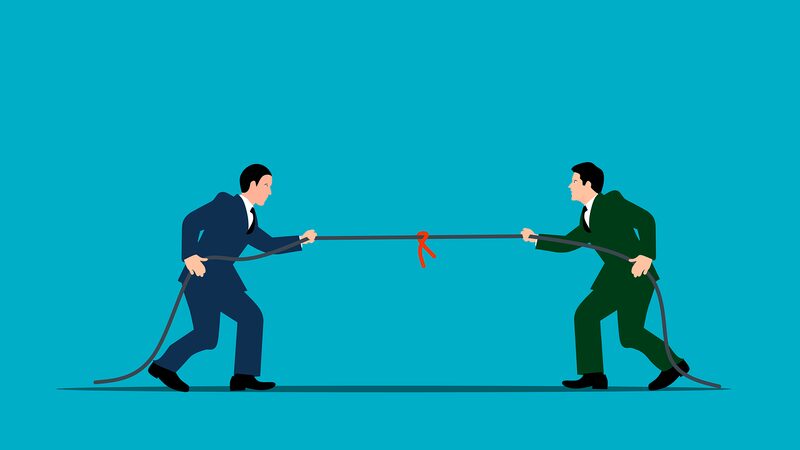 Photo by Mohamed_hassan on Pixabay
Sarah matched with Mark on 2RedBeans. They had genuine chemistry. Mark is an engineer—introverted, not great with compliments, but solid in the ways that matter. He remembers how she takes her coffee. He fixes things. He shows up.
Then came month two of actually dating.
A small thing triggered it. Mark had drinks with coworkers on a Friday, wasn't watching his phone, took three hours to reply to Sarah's messages. Sarah swallowed her reaction in the moment, but something flipped inside. Over the next few days, she found herself tracking his response time: how long between when she texted and when he texted back. Comparing it to how quickly she replied to him. The math didn't add up. "He used to respond right away," she told herself. "Something's changed."
So she tested it. She started delaying her own replies, watching to see if he'd notice. He didn't seem bothered. That made it worse. He doesn't care if I respond. She swung the other direction—constant contact, wanting check-ins, needing a video call before bed or she couldn't sleep. One night when Mark stayed late at the office without a heads-up, she got in an Uber to his building, told him she was "passing through."
At first Mark kept up. Then he started pulling back. Messages came slower. Video calls got a "can't tonight." Dates got shorter. The more Sarah reached for him, the more he retreated. And the more he retreated, the faster Sarah spiraled. "Are you losing feelings?" she'd ask. "Do you find me annoying?" He'd always say the same thing: "No, I'm just tired."
Three months in, Mark sent her a long message. He said he was breaking up with her. His exact words: "You're a good person, but I can't breathe. It's not that I don't like you. It's that being constantly watched feels suffocating. I don't know how to make you feel secure, so I end up feeling like I'm failing all the time."
It took Sarah weeks to process that sentence. She told her therapist later: "I was terrified of him leaving me, and I basically pushed him out the door myself."
What's Actually Happening Here
This is textbook anxious attachment meeting avoidant attachment—the pursuit-escape loop. Sarah's reaching out is her anxious nervous system demanding proof she won't be abandoned. Mark's retreating is his avoidant nervous system going into protection mode—when he feels pressured or criticized, his instinct isn't to talk; it's to shut down. In his mind, "she's unhappy" equals "I'm failing," so he shuts down emotionally, telling himself that distance will ease the pressure. (For more on why people like Mark retreat instead of connect, check out our deep dive on avoidant attachment.)
What's brutal about this cycle is that both of them unknowingly conspired to end the relationship. Every test Sarah ran was meant to draw him closer, but from his perspective, every test was a boundary violation. Neither of them was being malicious. They were both just operating on autopilot from their attachment wiring. But the dynamic they created was one where they were pulling in opposite directions, and nothing either of them did could stop it. It wasn't that they didn't love each other. They just spoke different languages—one of them in fear, the other in retreat.
Case Study Two: Michael's Over-Giving
 Photo by Haninabz on Pixabay
If Sarah's anxiety shows up as external seeking, Michael's anxiety shows up as internal overdrive.
Michael's in his mid-thirties, works in tech in the Bay Area. On the surface: warm, attentive, always the first to say "it's fine" or "don't worry about it." But underneath, he's running one core belief: I have to be enough to deserve love.
This plays out in specific ways. He always picks up the check—split it with him and he feels he's failed. His girlfriend mentions wanting to see the Northern Lights one day, and by that afternoon he's built out a detailed itinerary with budget breakdowns. If she's having a rough day, he can drop everything and video call for three hours—then work until 2 AM to catch up on his own stuff.
Sounds like a dream, right? Partner goals. Except both of his serious relationships ended around the six-month mark. One girlfriend told him something that stuck with him: "You treat me like a client you're servicing, not like a person you're with."
Michael's generosity wasn't actually about generosity. It was about insurance. His core operating principle was: If I do enough, give enough, be perfect enough, you won't have a reason to leave me. But here's what happens when you turn a relationship into a "protect against abandonment" strategy: the relationship changes shape. What she feels isn't love anymore—it's obligation. Unspoken pressure. The message she hears is: You owe me your presence because of what I've done. Once something becomes a debt, the closeness dies.
What's Actually Happening Here
Michael's over-giving is really just another expression of the same anxious attachment pattern as Sarah's reaching out. Both are attempts to buy security by controlling outcomes: If I perform perfectly, you can't leave. But healthy relationships aren't transactions. Giving can become a weapon, a burden, a way of making your partner responsible for your sense of self-worth.
Michael thought he was offering love. What he was actually doing was demanding reassurance through gift-wrapping and perfectionism. He'd drained himself so he could control whether he got abandoned. But you can't manage your way out of abandonment anxiety. At a certain point, your partner just feels trapped.
Case Study Three: Jessica Finds a Way Through
 Image generated by Gemini Nano Banana
Jessica came to a 2RedBeans matchmaking counselor after two relationships that started strong but fizzled fast. Her summary: "They're always great at first. Then I do something weird, and around month three or four, they just... drift."
The counselor asked: What's the "weird" thing?
Jessica thought about it. She'd get upset over something small, not say anything in the moment, then days later explode about it. She'd write long texts at midnight, regret them in the morning. She'd see her boyfriend mention a female coworker and feel a spike of panic. She'd refresh his social media feed a dozen times a day—watch the likes, who was engaging, if there were women in the comments.
Then she said something that caught the counselor's attention: "But honestly, even when it's happening, part of me knows the problem isn't actually him. I just can't stop myself."
That sentence—I know the problem isn't him, but I can't stop myself—that's the beginning of change.
Jessica didn't become a different person. But over the next few months, she did one very concrete thing: she stopped treating her emotions like facts that required immediate action. Old pattern: panic, send message. New pattern: panic, pause five minutes, ask herself What do I actually need right now?
The answer was usually something like: I need him to tell me he's not upset with me or I need to know I matter to him. Instead of packaging those needs as accusations ("Why are you ignoring me?" / "I saw you liked her photo")—which is what she used to do—she started saying them directly: "I'm feeling insecure right now. Can you help me feel reassured?"
The first few times she did it, she wanted to disappear. But here's what shocked her: her boyfriend didn't shut down. He didn't turn it into a conflict. He actually said something that clicked everything into place: "If you don't tell me what you need, I'm just guessing. And I guess wrong, then you're upset. But if you tell me, I can actually help. That's way easier."
Later, Jessica told the counselor: "I used to think saying it directly meant I lost. Now I see that hiding it behind anger is way less efficient."
What Changed
"Get better" is too big a concept. The real shift was smaller and more powerful: Jessica added a pause between the emotion and the reaction. Anxious attachment has already told your nervous system that silence = abandonment. You can't think that away. But you can create space to see the thought, recognize it for what it is, and choose a different response.
When she felt the impulse to send an accusatory message, she paused. When panic came up, instead of acting on it, she translated it: My panic is saying he's leaving. My actual need is to feel secure. If I approach this as a need instead of an attack, what happens?
Jessica didn't rewire her brain overnight. But each time she paused, she was drawing a new pathway. The old one didn't disappear—anxious attachment doesn't disappear—but it stopped being the automatic route.
Why This Matters
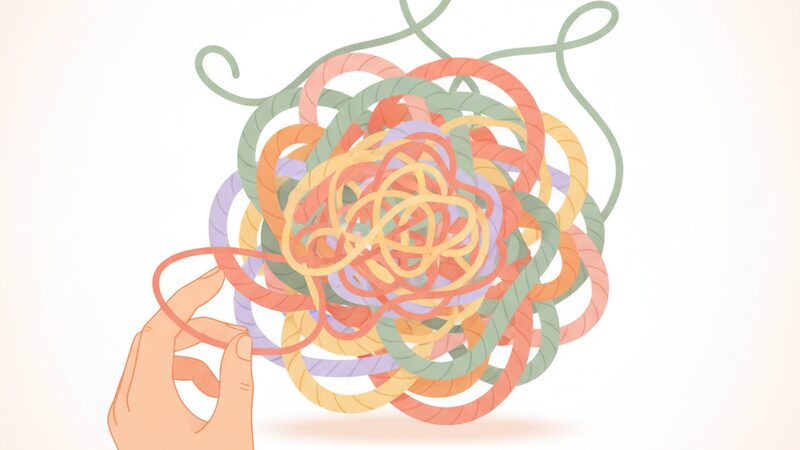 Image generated by Gemini Nano Banana
2RedBeans' matchmaking counselors have worked with thousands of singles for years. A consistent pattern emerges: People repeat the same relationship story over and over, sometimes without realizing it. The surface issues change—long distance, communication, different life goals—but underneath, it's often the same attachment dynamic playing out again.
Here's what we've noticed: anxious attachment shows up a lot in our community. These users tend to be thoughtful about their profiles, genuine in their initial connections, eager when they match someone. But once a relationship gets real, they start checking in with their counselor a lot: "He didn't text me today—does that mean he's lost interest?" or "She posted without liking my comment—what does that mean?" or "Should I have said something different last week?"
When you trace it back, it almost always roots in one thing: deep fear of being abandoned.
And here's the important part: this isn't shameful or uncommon. Attachment patterns are written into your nervous system through your whole life—family, past relationships, what you've learned about loss. This isn't a character flaw. It's not something that willpower or positivity can fix. It's written into your body as wisdom from the past.
But once you see it, you're not its puppet anymore. You can't think your way out of it, but you can slow down enough to notice when it's taking over. And that noticing is everything.
If you keep finding yourself in the same relationship story—exciting at first, then spiraling, then heartbroken—it might not be bad luck or wrong partners. It might be that the part of you that's terrified of abandonment is writing the script before you even know it's happening.
The first step isn't self-judgment. It's self-awareness. The second step is usually professional support—learning to see your patterns and practice new ways of reaching for connection that actually work.
Schedule a one-on-one consultation with a 2RedBeans matchmaking counselor and start breaking the cycle from the root.
Frequently Asked Questions
What exactly is anxious attachment?
Anxious attachment is one of the core adult attachment patterns described by attachment theory, originally developed by psychologist John Bowlby. People with anxious attachment tend to be hyper-attuned to their partner's emotional availability—constantly scanning for signs of rejection. They often have an intense fear of abandonment, seek frequent reassurance, and can slip into testing behaviors or emotional intensity when they sense distance. The key thing: it's not the same as being "clingy" or "needy" in a character sense. It's a protective response your nervous system learned to activate. This pattern is different from avoidant attachment (where people distance when they feel pressured) and secure attachment (where people can be present and connected without constant reassurance-seeking).
What are some specific red flags of anxious attachment in dating, especially for Chinese American singles?
Based on what 2RedBeans counselors see in our matchmaking work, anxious attachment commonly shows up as: wanting immediate responses after you match, spiraling if the person doesn't follow up after the first date, analyzing their social media activity obsessively (who they like, how fast they respond, whether they interact with others), asking "so what are we?" before the relationship has had time to develop, interpreting normal solo time as rejection, experiencing panic around any signal of distance, and sometimes oscillating between being very available and suddenly distant/cold as a way of "testing" if they care. These look like "paying attention" to the person on the surface, but they're actually signs that your fear system is in overdrive.
Can anxious attachment actually change?
Yes. It's not a personality trait—it's a learned response pattern, which means it can be unlearned. The key isn't to "stop being anxious" (that doesn't work) but to build awareness and practice pausing between the automatic fear reaction and your actual behavior. When you notice anxiety rising, can you name it? Can you ask yourself what you actually need versus what your fear is telling you to do? Can you express needs directly instead of through tests or escalating emotion? This rewires your nervous system over time. It's not fast or easy, but each time you handle something differently, you're building a new pathway. For deeper work—especially if anxious attachment is stemming from past trauma—working with a therapist alongside relationship counseling tends to create the most sustainable change.
How does 2RedBeans help people with anxious attachment patterns?
Our matchmaking counselors are trained to recognize attachment styles during the matching process, not just personality fit. For someone showing anxious attachment patterns, we provide guidance on healthy relationship pacing—what communication cadence actually builds connection versus what creates pressure. Our one-on-one consultations offer a deeper layer: we help you trace where your anxiety is coming from, what specific triggers activate it, and most importantly, how to translate panic into clear requests. If you're noticing yourself repeating the same relationship patterns, especially anxiety-driven ones, a counselor can help you understand your attachment map and start practicing different ways of seeking connection that actually work. Schedule a consultation to explore your attachment style and get concrete strategies tailored to your situation.
Cover photo by Tilixia-Summer on Pixabay