2RedBeans
Why ENFPs Crash and Burn in Love: A Matchmaker's Field Guide
I met R at a friend's dinner. She's a designer, classic ENFP energy—the kind of person who lights up the room without trying. Three weeks after she started dating someone, she posted a story: This time, it's different.
Let me tell you what "different" looked like. On the first date, they got caught in a downpour while looking for a specific dumpling place. R said it felt like being in a movie. Second date, he called her at 3 AM and read her a poem he'd written—badly, but genuinely. By the third date, she was already looking up wedding songs on Spotify.
Two months later, I asked how it was going. "Over," she said. "He just talks about work and video games. So boring."
Then, after a pause: "But honestly? I get bored in every relationship. Is it me?"
It's not just R. I've watched this pattern repeat across dozens of ENFP clients—the same arc, like clockwork. They start at a ten and fall off a cliff. The rush comes in like a tidal wave, and then just… evaporates, with no explanation even they can give.
This piece isn't about generic MBTI personality traits. We're going to dig into something specific: what actually works for an ENFP in a relationship, and how to turn that initial heart-racing feeling into something that doesn't implode by month four.
The Three Things ENFPs Actually Need
 Photo by Clker-Free-Vector-Images on Pixabay
ENFPs pursue, love, and leave people—sometimes all in the same quarter. It's not fickleness. It's three hardwired needs, and when one isn't being met, the whole system crashes.
Novelty Isn't About People—It's About Growth
There's a huge misconception that ENFPs need to keep switching partners to stay interested. Completely wrong.
ENFPs are actually deeply loyal—if the relationship itself is evolving. What terrifies them isn't stability; it's stagnation. The moment conversations boil down to "what's for dinner" and "want to hit Costco this weekend," ENFP starts gasping for air. It's not psychological—it's physiological.
This runs deep. ENFP's dominant function is extraverted intuition (Ne), which hungers for new possibilities. If your partner stops feeding it, the system shuts down.
When R said he "just talked about work and games," she wasn't complaining about the subjects. She was saying: I don't see this relationship growing in any direction.
Deep Connection Means Being Chosen, Again and Again
ENFP's second core need is depth, but not the way other people define it.
Most people want depth to mean "you prioritize me." ENFPs want it to mean: among all the people and possibilities out there, you choose me. Deliberately. Repeatedly.
This isn't possession. It's confirmation.
ENFPs are too good at surface-level connection. They can chat with a stranger at a coffee shop about life, purpose, and regret—by the end, that stranger thinks they've found their soulmate. Which is why the real test for ENFP is whether their partner can see through the social sparkle and reach the actual person underneath.
Here's a tell. ENFPs look radiant in any room, but their real emotional cues come from quietly observed moments. A text that says "you seem tired today" from a friend is just politeness. From a partner? ENFP hears: you see me when the lights are off.
Freedom Means Don't Trap Me in a Role
ENFPs hate roles. When a social situation asks them to play "someone's partner"—sit at a dinner table, smile elegantly, support their person's narrative—ENFP feels compressed into a two-dimensional cutout.
They'll give everything to someone. But there's a condition: it has to feel chosen, not obligatory.
The moment a partner starts with "other people's boyfriends/girlfriends always..." or "normal couples do...", ENFP's alarm bells go off. They're not rebellious. Their wiring just doesn't work with templates. In ENFP's mind, relationships are co-created, not Xeroxed.
Call it extreme: you can ask an ENFP to do anything. You cannot ask them to do it like a "proper partner" does.
The Best Match: Who Can Ground a Free Spirit Without Clipping Their Wings?
Disclaimer first: MBTI pairings aren't destiny. Any type can fall in love with any other type. When we say "best," we mean cognitive function alignment—which combinations establish compatibility fastest, right out of the gate.
ENFP + INFJ: Speaking the Same Inner Language
The ENFP-INFJ pairing is what many MBTI researchers call a "mirror match."
Here's why: ENFP's outward scatter (Ne) is exactly where INFJ digs inward (Ni). One diverges, one converges. INFJ won't think ENFP "overthinks"—INFJ literally runs on deep rumination. ENFP won't find INFJ boring, because INFJ's inner world is way more layered than ENFP imagined.
The feeling functions click too. ENFP uses introverted feeling (Fi) to ask "what's authentically true for me?" INFJ uses extraverted feeling (Fe) to ask "what does this group need?" They can balance each other. ENFP helps INFJ stop carrying everyone else's weight; INFJ catches ENFP's untethered emotions and sets them down gently where they make sense.
I know an ENFP-INFJ couple. The woman (ENFP) told me: "With him, I don't need to explain myself. Not because we don't talk—because he already knows."
ENFP + INTJ: Evolution Through Tension
ENFP and INTJ (Ni-Te-Fi-Se) is the textbook "opposites attract" story.
ENFP is naturally drawn to INTJ's vibe—calm, unrushed in socializing, but when they open their mouth, every word is carefully reasoned. That's way more magnetic for ENFP than "you're so pretty."
INTJ feels something similar in reverse. INTJ leaves space in relationships, guards themselves—but ENFP comes in completely undefended. That kind of honesty makes INTJ jealous, actually.
The long-term viability depends on one thing: can ENFP handle INTJ's lag in emotional processing? INTJ feels things, but digests them slowly. ENFP might wait three days for a real response from INTJ. If they can sit with that, it's a power couple. If not, ENFP bails early, thinking "you don't even care about me."
The Friction Zones: When Sparks Become Exhaustion
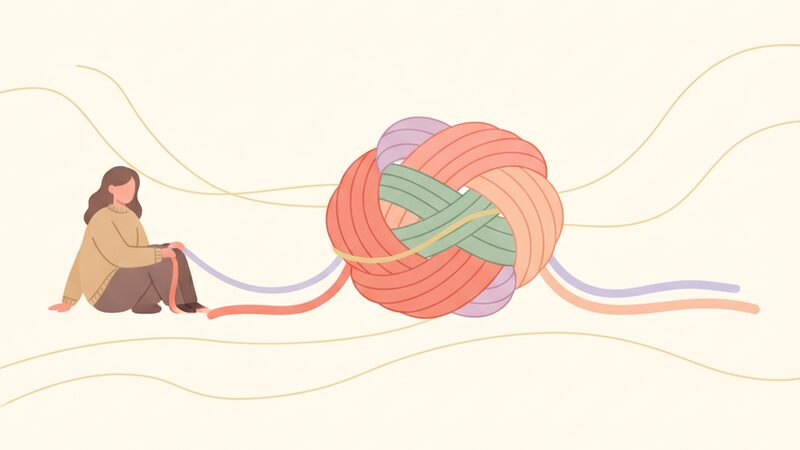 Image generated by Gemini Nano Banana
Some people make ENFP feel nothing from the start—and that's fine, ENFP has plenty of options. The danger is different: huge initial spark, then three months of mutual grinding.
ENFP + ISTJ: Two Languages for the Same Sentence
ISTJ's functions (Si-Te-Fi-Ne) are ENFP's in complete reverse. MBTI calls this "opposition pairing"—magnetism can be intense, but daily friction is real.
The early pull: ISTJ's structure feels like "finally, someone's catching the things I drop." ENFP's spontaneity feels like "maybe life doesn't have to be so tight" to ISTJ.
Then month three hits, and it all explodes.
ISTJ needs order and predictability. Saturday plans should lock in by Wednesday. Spontaneous social changes cause actual stress. ENFP's core need is exactly the opposite—improvise, see where it goes, no script.
ISTJ thinks ENFP is irresponsible. ENFP thinks ISTJ is choking the life out of everything. Neither is wrong. Their definitions of "comfortable" are just incompatible.
ENFP + ESFP: Playmates Aren't Partners
ENFP and ESFP (Se-Fi-Te-Ni) are fun together. Both are outgoing, both crave new experiences, both glow at concerts and hot pot dinners. ENFP initially mistakes this for soulmate energy. "Finally, someone who'll do all my crazy ideas with me!"
But ESFP's driving function is extraverted sensing (Se)—their fuel comes from right now, real sensations. ENFP's deeper layer—the 2 AM conversations about abstract fears, the moods you can't quite name—ESFP can't quite land the plane on those.
ESFP isn't being cold. They show love by actions: taking you somewhere delicious, buying you that thing you glanced at. ENFP gets moved by it, sure. But it's not enough.
ENFP's unspoken needs pile up, and one day ENFP wakes up thinking, "Are we just having fun, or is this real?" ESFP's lost—we were always having fun, what's changed?
The Pattern: Where ENFPs Get Stuck
 Photo by franganillo on Pixabay
Zoom out from these specific combinations, and you see ENFP hitting the same walls over and over.
The Crash After the Rush
ENFP's attraction locks in during one perfect moment. Someone says something that hits an emotional chord, or shows up exactly as ENFP imagined—and ENFP instantly unfolds that moment into a full feature film.
What ENFP loves isn't the person. It's the possibilities that person ignited in ENFP's mind.
That possibility is intoxicating. But reality's never as dimensional as imagination. When the person turns out to be just… a person, the drop is brutal. ENFP doesn't think they were lied to. They think they were wrong about the person.
Running From the Mundane
ENFPs are incredible at igniting things. Sustaining is different—it needs repetition. Repeated check-ins, repeated reassurance, repeated low-stakes moments that aren't inherently interesting.
ENFP's instinct: when something stops sparking, move on.
This works in careers and hobbies—ENFP's range is genuinely remarkable. In relationships? It's a trap. Because no relationship is consistently exciting. There will be quiet Tuesday nights. There will be the refrigerator humming in silence.
Real ENFP growth means learning this: boring isn't the opposite of love. It's the baseline.
The Relationship as Idol, Then Disappointment
ENFP's inner feeling (Fi) makes them almost religious about relationships. Love should be this way. They should understand me. We shouldn't clash like this.
When reality clashes with that ideal, ENFP doesn't troubleshoot. ENFP decides: They're not the one.
This phrase is ENFP's breakup mantra, and it's almost always avoidance.
I worked with a guy (ENFP) who ran through five relationships in four years. Each one, same comment: "This time, I'm sure it's real." After the fourth breakup, he laughed at himself: "I haven't made it past the first fight in any of them."
It wasn't that these five people were wrong. He just picked the exit ramp every time the road got rough.
How To Convert a Firework Into Something That Lasts
We tell ENFPs this in sessions: You're not bad at long-term relationships. You just need a translator.
What needs translating? That a crush and real love are different. That "dull" and "secure" aren't the same word. Here's what we actually tell ENFP clients:
One: Slow down confirmation. Speed up truth-telling. ENFPs commit hard during the high—"you're my person," "let's go to Iceland together," "I've never felt this way." Then chemistry fades, and those promises feel like weights. We recommend ENFPs wait to confirm the relationship until after you've had your first real argument. Not to "test" someone, but because you need to know: what does this person do when you disagree? What do you do? That teaches you more than a hundred perfect dates.
Two: Name what you're actually feeling. ENFP gets overwhelmed and pulls back—goes silent on texts, hides in friend group, checks out. Partner panics and pushes, ENFP runs faster. Instead: "I need some space right now, but I'm not leaving. Talk later." One sentence changes everything.
Three: Put a buffer zone between interest and action. You'll always be interested in interesting people—that's just ENFP. Doesn't mean you need to act on every flutter. Feel the feeling, file it away, check in two weeks later. By then, you'll see if it was real or just a sparkle.
Stop Questioning Yourself in the Friction; Find Your Real Match Instead
 Photo by geralt on Pixabay
If you're reading this thinking "so ENFP relationships are doomed"—let's clear the air.
Most ENFP relationship problems aren't about "the wrong person won't work." They're about incompatibility baked into the foundation.
Some friction you can talk through. Other friction—where one person needs daily depth-talk to function, and the other sees conversation as draining—that's not a communication problem. That's a pairing problem. Communication can't fix it. Only a better initial match can.
That's what 2RedBeans' matching algorithm actually does. When you're profiled, we're screening out the "initially intense but ultimately exhausting" options and putting compatible partners in front of you first—not because data is replacing instinct, but because we're skipping the part where you rebuild the same relationship five times with different people.
If you want to see your compatibility profile or talk through your relationship patterns with one of our matchmakers, you can schedule a one-on-one consultation. Your personality isn't your flaw—it's the roadmap to finding someone you don't have to change for.
Frequently Asked Questions
Q: What MBTI type does ENFP match best with?
A: Based on cognitive function alignment and patterns we see with our 2 million members, INFJ and INTJ tend to create stable foundations with ENFP. INFJ can absorb ENFP's scattered energy and provide genuine depth; INTJ offers the intellectual tension ENFP craves. But this isn't a formula. MBTI opens the door to understanding why you two click or grind—values, life stage, how you fight, and the million other variables are what actually determine if it sticks. Use the personality type as a lens, not a law.
Q: Why do ENFPs fall hard and leave fast?
A: ENFP's dominant function (extraverted intuition) makes them hyper-attuned to possibility. Early dating is possibility on steroids—you're still a mystery, still holding potential. The moment the relationship settles into actual personhood, ENFP can misread "reality" as "disappointment." Our matchmakers advise ENFPs to deliberately slow the early-stage timeline and spend more time with someone before deciding they're "the one"—get to see them on a bad day, at a family dinner, when they're sick or stressed. That real version matters more than the opening act.
Q: Can ENFP and ISTJ actually make it work?
A: It's not impossible. ENFP and ISTJ have complementary functions—ISTJ can ground ENFP's chaos into actual structure; ENFP can soften ISTJ's rigidity. The attraction early on is real. But the long-term friction is high: ENFP needs flexibility and spontaneity; ISTJ needs order and predictability. They're asking for opposite things. Couples who make it through typically have unusually strong self-awareness and communication, and they've built a specific agreement—"I respect your need for flexibility, you respect my need for routine"—that actually works when tested. If you're in this pairing and it feels exhausting more often than not, that's not a sign to work harder. That's information.
Cover photo by sirQ on Pixabay