2RedBeans
When a Breakup Comes Out of Nowhere: The 5 Real Reasons It Happens
You've been together for a year and a half. You were supposed to meet his parents next month. Your last date felt normal—dinner, a little work talk, him driving you home. The car pulls up to your building. He turns to you and says, "I've been thinking about this for a while. I don't feel it anymore."
No fight. No warning. That night he picks up his stuff. His number's still there, but he never reaches out again.
I hear versions of this story all the time in consultations. The details change, but the shape stays the same.
This is what we call a cliff-edge breakup—the kind where it feels like the ground just disappears. Most people swear it came out of nowhere, but when you piece it together later, you usually find something different: the cliff wasn't sudden. What was sudden was the announcement.
The Cliff Didn't Come Out of Nowhere: Three Signals You Probably Missed
 Image generated by Gemini Nano Banana
Here's what I've learned from hundreds of these conversations: almost every cliff-edge breakup had three distinct cooling periods before it happened. You just didn't connect the dots.
Signal One: He stops sharing the small stuff. He used to send you pictures of a funny dog, tell you about his lunch, narrate his day. Then gradually, conversations shift. "I have to work late." "Package arrived." "We'll talk about it later." No fights, but also—no real connection anymore.
Signal Two: Future plans stop being concrete. Meeting your parents went from "next month for sure" to "maybe when work slows down." The trip you booked gets postponed. There's always a reason, always something in the way, but the planning just... stalls.
Signal Three: After arguments, there's no repair. You fight, but instead of him coming to find you or you two talking it through, he just goes quiet. Two days pass. Then he acts like nothing happened. No resolution, just silence.
Most people realize afterward that all three of these happened—sometimes in the same week. You probably thought it was just adult life. Turns out, it was the relationship falling apart.
The Five Real Reasons Behind the Sudden Disappearance
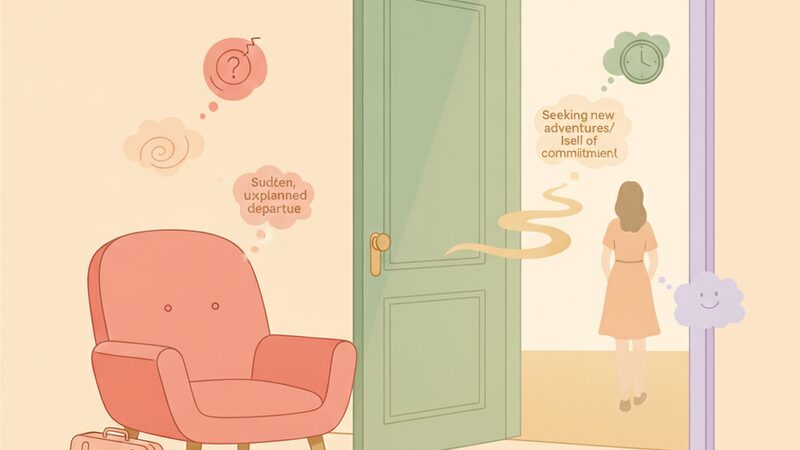 Image generated by Gemini Nano Banana
The "I don't feel it anymore" line never tells the whole story. Here's what's actually happening.
The Real Reason #1: He Already Ended It—He Just Picked His Exit Time
He sounds calm when he breaks up with you. Almost apologetic. The more upset you get, the more removed he seems—like he's already sitting in a conference room watching the clock.
What's really going on: He didn't wake up that morning and decide to leave. He probably started emotionally checking out weeks ago. He turned off the sharing, the future talk, the vulnerability—one by one. By the time he tells you it's over, he's already left. You just didn't know it yet. He picked a time that felt low-stakes—when he had an exit strategy, when he wouldn't get dragged into an argument he'd already won in his head.
The Real Reason #2: He Can't Handle the Pressure—Avoidant People Break When Things Get Real
There's usually a timing pattern here: he mentions breaking up right before a milestone. Right before you move in together. A week before meeting the family. When you start talking seriously about the future. No other drama. No one else. Just him, suddenly saying it's over.
What's really going on: For avoidant people, intimacy feels like suffocation. The closer you get, the more it triggers him. When a relationship crosses into "this is serious now" territory, his anxiety spikes. He can't handle the expectations, the expectations feel like pressure, and pressure makes him want to run. He's not running from you. He's running from his own fear of failing you—so he leaves before he has to try.
The Real Reason #3: External Pressure Crushed the Relationship
Picture this: his parents don't approve. His visa situation is a nightmare. His job just went sideways. Work is consuming him. Any one of these is manageable. All three happening at once, and he's drowning.
What's really going on: When someone is already underwater, a relationship starts looking like extra weight. Not because he doesn't love you—because he literally can't hold anything else up. You probably noticed him quieter, more withdrawn. He might have even said, "I can't even take care of myself right now." And then: breakup. He's not abandoning the relationship. He's trying to simplify what he thinks he can fail at. This isn't fair to you, but it's real.
The Real Reason #4: His Attention Went Somewhere Else
He starts working late constantly. His phone is glued to him. He's vague when you ask about shared friends. A month after the breakup, he's suddenly got new plans, new energy, new everything.
What's really going on: His focus shifted—maybe to someone else, maybe to something else (a project, a friendship, a hobby that became an escape). He didn't necessarily lie to you about it. He just used the silent treatment until you got tired, and then gave you the bare minimum explanation. It's avoidance with a purpose: making it easier for him to leave.
The Real Reason #5: He's Just Choosing Not to Be a Decent Human About It
And then there's this: he knows you're going to hurt. He knows you deserve an explanation. He does it anyway. Maybe he blocks you everywhere. Maybe he leaves one of those "you deserve better" messages and ghosts you anyway.
What's really going on: This isn't a personality type or a circumstance. It's a choice. A grown man can say "this isn't working" and have a real conversation. He's choosing not to. He's choosing to make himself the coward so he doesn't have to be the bad guy. When you push for answers, he makes you the problem. The best response? Stop giving him your emotional energy. He didn't earn it.
Should You Ask Him What Happened? A Framework for Deciding
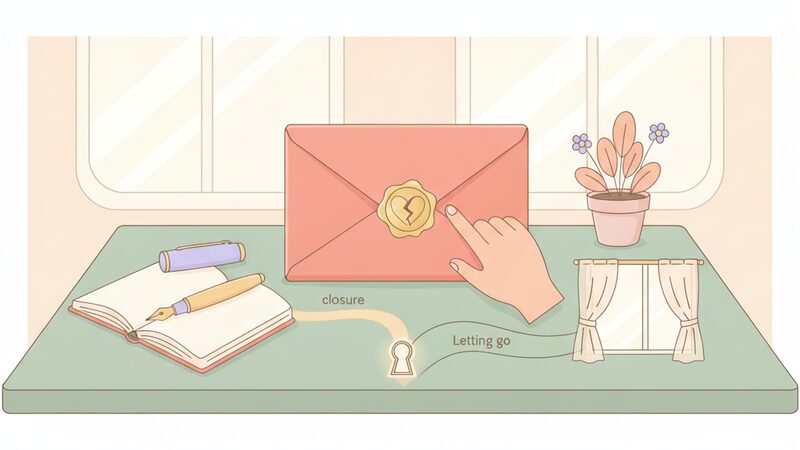 Image generated by Gemini Nano Banana
People ask me this constantly: should I reach out and ask for a real explanation?
The answer isn't yes or no. It depends on what you're actually hoping for.
Don't ask in these situations:
- He already told you what bothered him, even indirectly. If you press him now, you'll just get a harsher version.
- It's been more than ten days and you haven't heard from him. Silence is his answer.
- You think he's avoidant. The harder you push, the more he'll disappear. You'll never get a straight answer, just distance.
You can ask once if:
- He was vague about the breakup itself. Like, he said "I'm not in a good place" but didn't actually say it was over.
- There's shared property, a pet, money, or something concrete that needs a real answer.
- You need factual closure—like, you need to know if there's someone else. Ask once. Don't debate the answer.
Here's the real thing: most of us asking aren't really looking for an explanation. We're looking to be fought for. We want him to chase us. And when he doesn't, we keep asking, thinking this time will be different.
It won't be.
How to Actually Heal From This: The Real Steps
 Image generated by Gemini Nano Banana
Step One: Stop asking. This is the hardest part. Accept that the reasons might stay a mystery—and that's actually okay. The damage from a cliff-edge breakup isn't the mystery. It's the feeling of being disposable. The more you ask, the longer you stay in that "disposable" position. You have to step out of that role yourself.
Step Two: Rewrite the story. Stop telling yourself, "He left me with no warning." Start telling yourself, "We hit the edge of what he could give." The point isn't that you weren't enough. The point is that he doesn't have the skills to handle a real relationship. List three things he did (or stopped doing) before the breakup: he stopped initiating, he refused to talk about the future, he went cold when you were struggling. Those weren't signs you missed. Those were the relationship already failing.
Step Three: Trust your instincts again. From now on, believe what people do, not what they say. "I'll change" means nothing. Has he changed? "I don't want to hurt you" means nothing. Is he hurting you? The words are noise. Watch for the behavior.
Your cliff-edge breakup recovery checklist:
- Week one: Ask him one question if you need to. After that, write the rest down. Don't send it.
- Back up the messages, then delete them from your phone. Don't go digging through old conversations.
- Do one concrete thing every day: cook a real meal, go for a run, meet a friend. Something you finish.
- Write this down: "It's not that I wasn't good enough. He doesn't know how to stay." Reread it when you're spiraling.
- List three things he did before the breakup that showed it was already over. Accept the cliff was there. You just saw it late.
- In three weeks, if you're still waiting for an explanation, tell someone you trust about it instead of him. Not the ex. A real friend.
The real turning point isn't when you understand why he left. It's when you stop waiting for him to explain it. You're not the one who needs to understand. He does.
The relationship ended. You don't need his permission to move on.
If you want to rebuild your judgment and patterns before the next relationship, you can book a one-on-one consultation with a 2RedBeans matchmaker. They can help you sort through what happened and make sure you're not carrying this into the next connection. Schedule a consultation here.
Common Questions
What's the difference between a cliff-edge breakup and the silent treatment?
With the silent treatment, the relationship is technically still there—one person just goes cold and won't talk. You're stuck in this painful limbo. With a cliff-edge breakup, he ends it directly, but the announcement is sudden. The key difference: the silent treatment has no clear ending. A cliff-edge breakup has one—it just comes out of nowhere. Both are painful, but they're different problems.
Why does he seem fine after the breakup, like nothing even happened?
He probably isn't fine. He just started checking out way earlier. You saw the breakup as the breaking point; he saw it as the finish line. His grief was already done. Some people also just bury it in work and socializing—it looks like he's moved on, but he's just not processing it. Either way, his recovery speed isn't a measure of your worth.
Should I delete his contact info after a cliff-edge breakup?
If you find yourself checking his social media, refreshing his profiles, looking for signs he misses you—delete it or at minimum mute him and leave shared group chats. Deleting isn't mean; it's stopping the wound from staying open. If there's shared money, a pet, or logistics to handle, keep the contact but keep it practical. No feelings talk. Logistics only. Once it's handled, you're done.
Cover image generated by Gemini Nano Banana